Newsletter Subscribe
Enter your email address below and subscribe to our newsletter
Enter your email address below and subscribe to our newsletter

 ByJohn A
The thing worth monitoring is not the dose count but the certainty behind it. If nobody can state what was delivered and when, symptoms stop being interpretable and every report becomes a guess. Two categories of red flag matter: the labeled adverse reactions for this drug class, and the signs that a pen has silently under-delivered or been used outside its instructions.
A clinician assessing nausea, a plateau, or a glucose reading needs three facts: the product, the amount, and the date. Someone who improvised with a pen that stopped short, or who drew from a container the labeling never intended, cannot supply any of them accurately. The symptom then gets attributed to the drug when the actual variable was delivery.
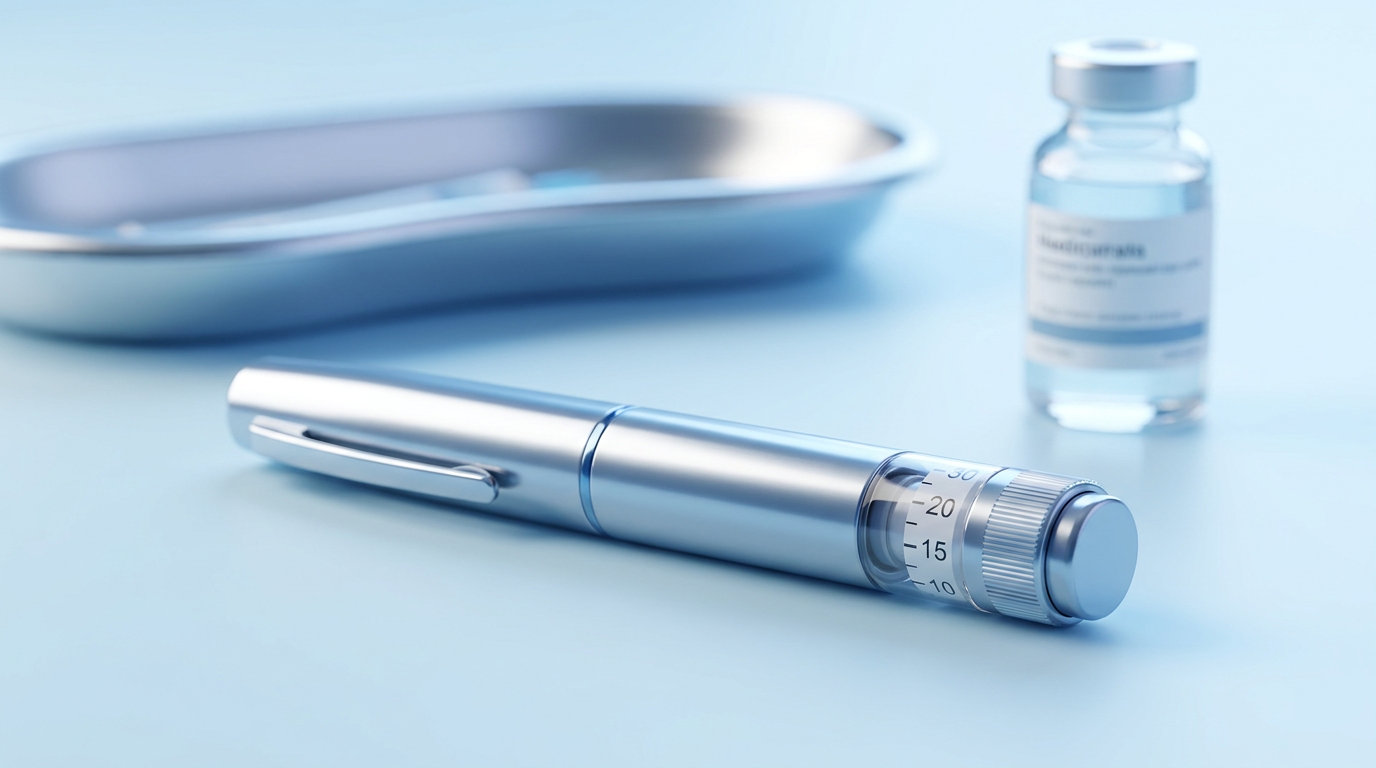
This is why the instructions for use insist on reading the dose counter and dose pointer rather than listening, and state directly not to set a dose by counting the clicks, noting the selector clicks differently turned forward than backward. The counter is the record. Nothing else on the device is.
The DailyMed label carries a boxed warning about thyroid C-cell tumors observed in rodents, with contraindications in anyone who has a personal or family history of medullary thyroid carcinoma or multiple endocrine neoplasia syndrome type 2. Beyond that, the warnings section names acute pancreatitis, diabetic retinopathy complications reported in a clinical trial, acute kidney injury from volume depletion, hypersensitivity reactions including anaphylaxis and angioedema, acute gallbladder disease, and pulmonary aspiration during general anesthesia or deep sedation.
A subsection on severe gastrointestinal adverse reactions was added in October 2025. It reports severe events more frequently with semaglutide than placebo in trials, at 0.4 percent on 0.5 mg and 0.8 percent on 1 mg against zero on placebo, and states the product is not recommended in patients with severe gastroparesis. Hypoglycemia is a separate concern when the drug is combined with insulin or an insulin secretagogue, where the labeling notes reducing the dose of those medications may be necessary.
| What is observed | What it may indicate | Reasonable timing for contact |
|---|---|---|
| Severe abdominal pain, often radiating to the back, with vomiting | Possible pancreatitis, a labeled warning | Same day, urgent |
| Vomiting or diarrhea preventing fluid intake | Volume depletion and kidney injury risk | Same day |
| Facial or throat swelling, rash, breathing difficulty | Hypersensitivity reaction | Emergency |
| New right upper abdominal pain, fever, jaundice | Gallbladder disease | Same day |
| Sudden vision change in someone with retinopathy | Retinopathy complication, a labeled warning | Same day |
| Shakiness, sweating, confusion while also on insulin | Hypoglycemia from a combination effect | Treat, then report promptly |
| Uncertainty about what was actually injected | A delivery problem, not a drug effect | Before the next scheduled dose |
The most under-recognized problem produces no symptom at all. The labeling warns that if no drop appears at the needle tip during the flow check, no medication is being injected even though the dose counter still moves, which can happen with a blocked or damaged needle. The flow check is specified once, before the first injection from each new pen.
Someone who skips it can complete the full sequence, see the numbers change, and receive nothing. Weeks later this reads as loss of effect or tolerance rather than as a device issue. Two other labeled details create the same confusion: the counter stops before the number when a pen no longer holds a full dose, and a pen in use is only good for 56 days regardless of contents.
Published safety data gives some shape to the failure modes. A population-based analysis in Expert Opinion on Drug Safety reported an increase in accidental overdose reports involving GLP-1 receptor agonists, and a separate characterization of GLP-1 agonist exposures at a single United States poison center in Clinical Toxicology described the pattern of calls received. A pharmacovigilance study of compounded GLP-1 receptor agonists using the FDA adverse event reporting system examined that segment specifically.
The mechanism in these reports is rarely exotic. It is measurement: a person converting between a device that meters for them and a container that does not, usually a vial and syringe standing in where a pen used to be.
Judging any of this is easier when a provider states its dosing and safety information in the open rather than only inside a portal. HealthRX keeps its Ozempic details on a public product page, manufacturer sites like LillyDirect and NovoCare Pharmacy do the same for the branded device, and telehealth services such as Henry Meds, Ro, and Hims & Hers range from detailed to sparse on what they show before a purchase. A page that spells out the warnings is one a reader can weigh a later symptom against.
Pulmonary aspiration during general anesthesia or deep sedation is now a named warning on the label. A study in JAMA Surgery found residual gastric content before anesthesia was more common in patients using GLP-1 receptor agonists, and a 2025 narrative review in Current Medical Research and Opinion set out perioperative management approaches for this drug class. The practical point is that a surgical or endoscopy team needs to know the drug, the amount, and the date of the last injection, which is exactly the information an uncertain dose count destroys.
Monitoring only works if there is somewhere to report to. Manufacturer channels such as NovoCare Pharmacy and LillyDirect handle dispensing but are not the clinical contact. Among telehealth programs, Ro, Hims & Hers, LifeMD, Noom, and FormBlends differ in response time, in whether a clinician or a support agent replies first, and in whether an unscheduled question costs anything. Those differences decide whether a red flag gets acted on this week or at the next refill, and they are worth comparing before the first order rather than during a bad night.
Compounded semaglutide is not FDA-approved, and its concentration is set by the compounding pharmacy. There is no dose counter, no fixed count printed on the carton, and no agency-reviewed label to check a symptom against. FDA has published warnings about unapproved versions of these drugs marketed for weight loss, including preparations using salt forms that are not the same active ingredient as the approved product. The monitoring that a labeled device partly automates has to be done deliberately instead.
How long should nausea last after a dose increase?
Gastrointestinal effects commonly appear after a step change and ease over the following weeks. What does not fit that pattern is vomiting that blocks fluid intake, symptoms that worsen rather than settle, or severe abdominal pain. The label added a severe gastrointestinal reactions warning in October 2025, so persistent severe symptoms warrant contact rather than waiting.
Is low blood sugar expected on semaglutide alone?
The labeling flags hypoglycemia risk mainly in combination with insulin or an insulin secretagogue such as a sulfonylurea, and notes reducing the dose of those medications may be necessary. Symptoms in someone on semaglutide alone deserve investigation rather than being assumed to be a normal effect of the drug.
Does an anesthesia or endoscopy team need to be told?
Yes. Pulmonary aspiration during general anesthesia or deep sedation is a labeled warning, and published data found more residual gastric content before anesthesia among users of this drug class. Give the product name, the amount, and the date of the most recent injection when the procedure is scheduled, not on the day.
What information is most useful after a suspected dosing error?
The container and its printed strength, what the counter read or what was drawn up, the time it happened, whether a flow check was done on that pen, and any symptoms since. That set lets a clinician or poison center reason about exposure. Injecting again to correct a suspected shortfall is the step that turns a small error into a large one.