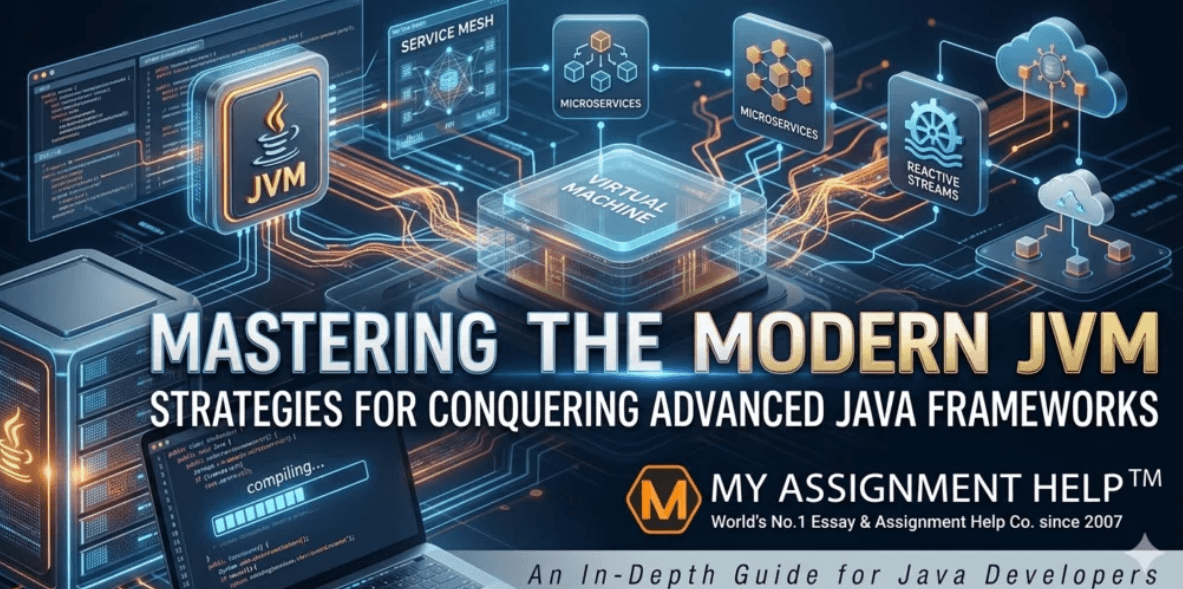

The transition from “knowing Java” to “mastering Java frameworks” is where most developers face their steepest learning curve. In the United States, the demand for enterprise-grade backend stability has made frameworks like Spring Boot, Quarkus, and Micronaut the backbone of the $450 billion cloud infrastructure market.
However, for many students and junior developers, the shift from imperative programming to the Convention over Configuration (CoC) and Inversion of Control (IoC) paradigms of these frameworks can feel like learning a new language entirely.
The Framework Paradox: Why Complexity is Rising
Modern Java isn’t just about syntax anymore; it’s about managing distributed systems. According to the 2024 Jakarta EE Developer Survey, over 60% of enterprise developers are now prioritizing cloud-native architectures. This shift requires a deep understanding of dependency injection, aspect-oriented programming (AOP), and reactive streams.
If you are currently navigating the complexities of Spring Security or Hibernate’s persistent layers, you aren’t alone. Many students seeking myassignmenthelp for their java homework help find that the leap from basic “Hello World” apps to production-ready microservices requires a specialized level of technical mentorship. Navigating these frameworks isn’t just about passing a course; it’s about building the high-performance, scalable systems that power modern American finance and healthcare sectors.
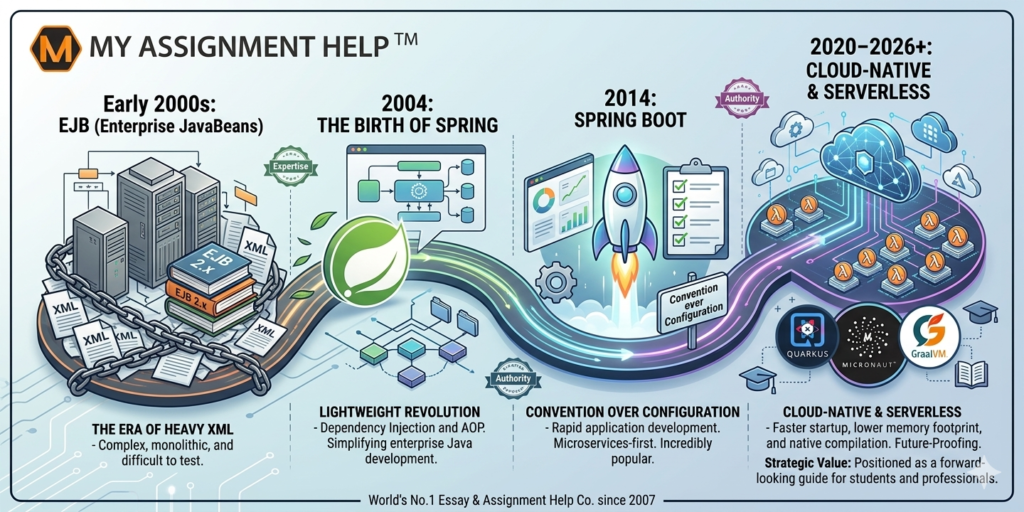
Tips for Mastering Advanced Frameworks
1. Master the “Magic” of Annotations
Frameworks like Spring Boot rely heavily on annotations (@Component, @Autowired, @Transactional). To master the framework, you must look under the hood.
- The Strategy: Don’t just memorize what an annotation does; learn the Reflection API that powers it. Understanding how a framework scans the classpath at runtime will help you debug proxy-related errors that plague complex builds.
2. Prioritize Reactive Programming (Project Reactor)
With the rise of high-concurrency apps, traditional thread-per-request models are being replaced by reactive programming.
- The Focus: Spend time learning Flux and Mono. Frameworks like Spring WebFlux are designed to handle thousands of concurrent connections with minimal overhead, which is a key requirement for modern SaaS platforms.
3. Deep Dive into ORM and Hibernate Performance
Object-Relational Mapping (ORM) is where most performance bottlenecks occur.
- The Secret: Learn about the N+1 problem and how to use @EntityGraph or Join Fetch to optimize database queries. Data-driven development shows that 70% of application latency often stems from poorly optimized database interactions.
The Java Framework Ecosystem (2026 Outlook)
| Framework | Primary Use Case | Key Benefit |
| Spring Boot | General Enterprise Web Apps | Massive community, “Batteries-included” |
| Quarkus | Kubernetes/Cloud Native | Fast startup, low memory footprint |
| Micronaut | Microservices & Serverless | No reflection; lightning-fast dependency injection |
| Jakarta EE | Legacy & High-Compliance | Standardized API for long-term stability |
Global Standards in Academic Excellence
Whether you are studying at a top-tier US institution or looking for online assignment help in the UK, the standard for technical documentation remains the same. High-quality code must be self-documenting, modular, and rigorously tested. Leveraging global academic resources ensures that your understanding of Java aligns with international industry standards, such as those set by the IEEE and the Association for Computing Machinery (ACM).
Key Takeaways
- Concepts Over Code: Understand Inversion of Control (IoC) before writing your first Spring Bean.
- Database First: Mastering Hibernate and JPA is 50% of the battle in enterprise Java.
- Cloud Readiness: Learn Quarkus if you intend to work in modern DevOps environments.
- Seek Mentorship: Don’t hesitate to use expert resources to bridge the gap between theory and practical implementation.
See also: Learning Blockchain Development
FAQ: Frequently Asked Questions
Q: Is Spring Boot still the best framework to learn in 2026?
A: Yes. Despite the rise of GraalVM-native frameworks like Quarkus, Spring Boot remains the industry standard in the US due to its extensive ecosystem and integration with Spring Cloud.
Q: What is the biggest mistake students make when learning Java frameworks?
A: Relying on “magic.” Many students use annotations without understanding how proxy objects are created, leading to massive debugging headaches in production-level code.
Q: How can I improve my framework performance?
A: Focus on memory management and database query optimization. Use tools like JProfiler or VisualVM to identify leaks in your application’s heap memory.
About the Author
Aidan Thorne is a Senior Academic Consultant at MyAssignmentHelp. With over 12 years of experience in Java Enterprise Edition (JEE) and a background in Software Engineering from the University of Melbourne, Aidan specializes in helping students navigate the transition from academic programming to professional software development. He is a frequent contributor to tech journals and a passionate advocate for E-E-A-T principles in technical writing.
Sources & References
- Oracle Java Trends Report 2025.
- Jakarta EE Developer Survey (2024).
- Cloud Native Computing Foundation (CNCF) Case Study: Java in Microservices.